Most people do not look up stroke order because they cannot write at all. They look it up because they hesitate: the character looks simple, but the moment pen meets paper the order feels uncertain. Was it horizontal before vertical? Left side before right side? Close the frame first or last? That small hesitation repeats itself across homework, class notes and HSK practice, and every wrong repetition quietly trains the wrong habit.
Wrong stroke order is genuinely hard to unlearn. Children who pick up a wrong sequence early carry it into higher grades, and adult learners often find that characters they supposedly know still come out messy or unbalanced on paper. Teachers see the same patterns every term: enclosure characters filled in before the frame is closed, left-right characters written right side first, and even simple characters like 人 or 八 written in reverse.
Correct stroke order is not only about neatness. Schools and exams expect it, handwriting input methods rely on it, and the standard sequence usually produces more balanced characters that are faster to write and easier to remember. That is why having a reliable way to check and practice stroke order matters far more than memorizing rules once and hoping for the best. A tool that shows the standard order and then makes you write it correctly turns every lookup into a small training session.
Chinese Stroke Order (中文笔顺) turns checking and practice into one short loop you can repeat for any character. Instead of guessing, you confirm the standard order in seconds and then write it yourself until it sticks.
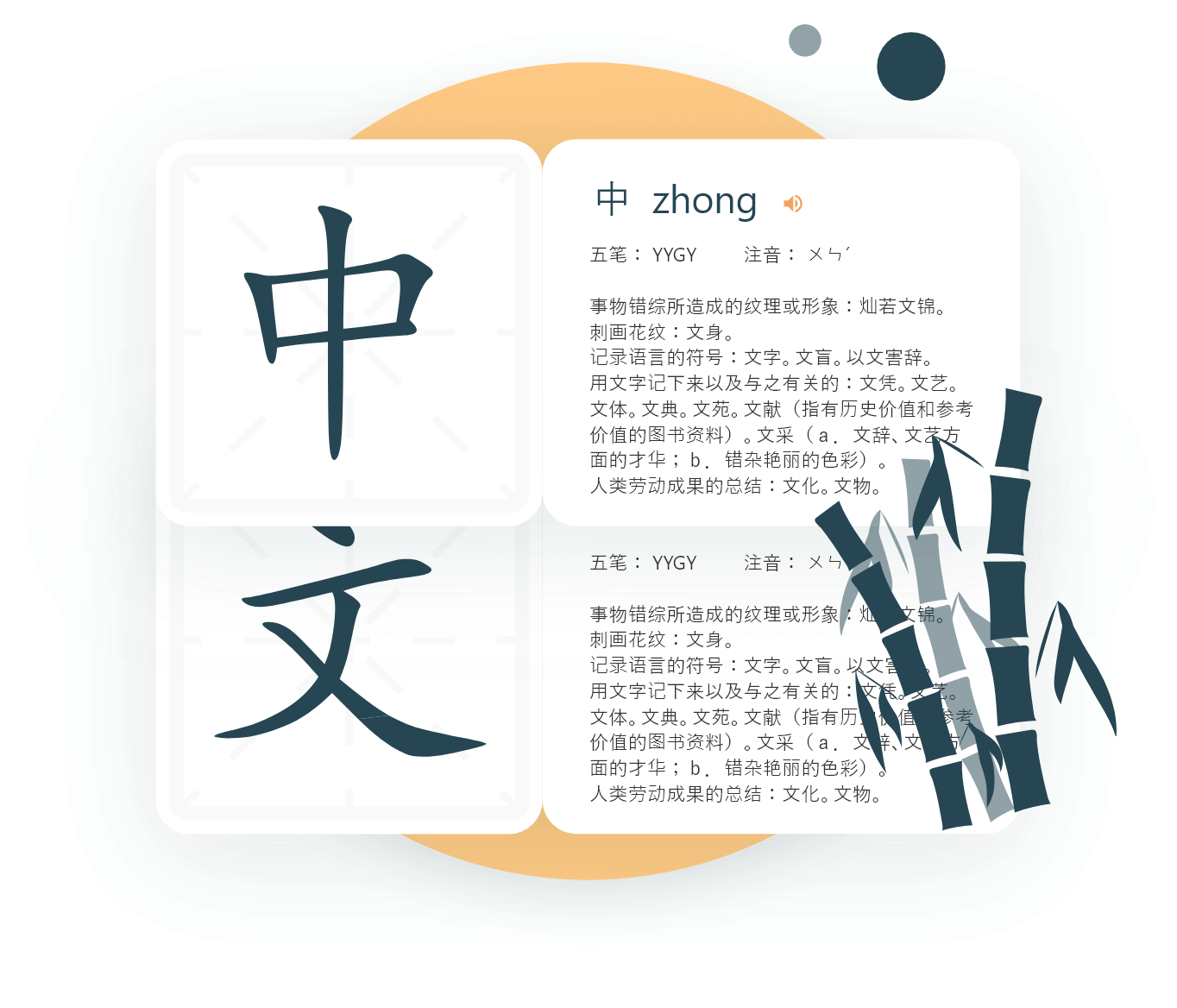
- Search any character, word or pinyin inside the app; the built-in dictionary covers more than 20,000 commonly used Chinese characters.
- Watch the stroke-by-stroke animation and notice where each stroke starts, the direction it moves, and the overall sequence.
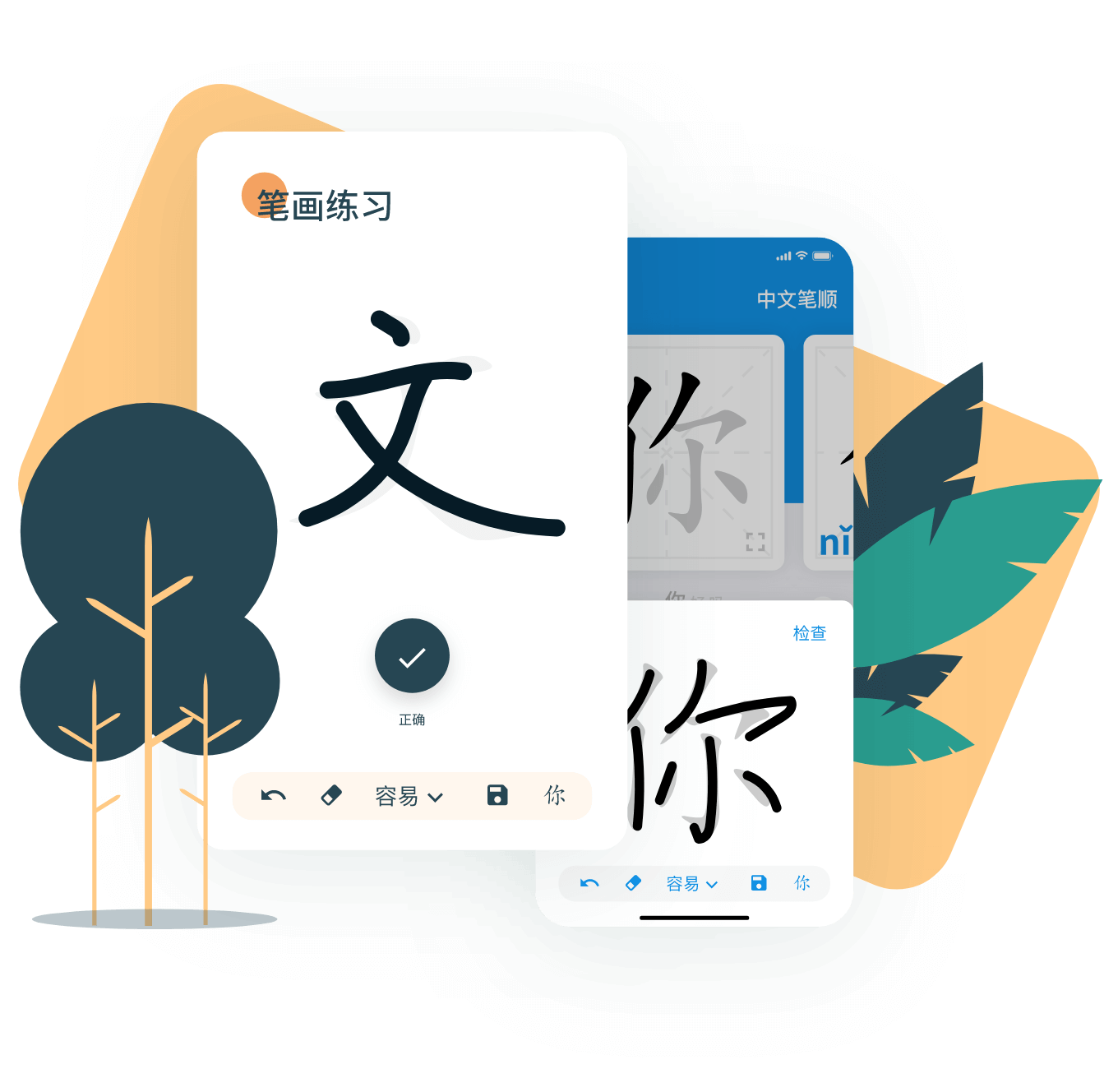
- Practice writing the character yourself; the practice mode checks that every stroke is written in the correct order, not only that the final shape looks right.
- Review the pinyin, meanings and native pronunciation so the character sticks as a whole, not just as a shape.
- Follow the built-in courses — basic literacy, common characters, HSK 1-6 and several primary school textbook sets — to practice in a structured order.
- Save difficult characters to your favorites and revisit them until the correct order feels automatic.
The loop is deliberately simple: look it up, watch it, write it, review it. A few focused minutes per character beats pages of copying in the wrong order, and because the app covers lookup, animation, practice and review in one place, there is no gap between finding the answer and actually learning it.
Three groups rely on stroke order lookup every day, and each group needs something slightly different from it: speed for students, a trustworthy reference for teachers, and confidence for parents.
Students
Students use the app the moment homework or HSK practice raises a doubt. Watching the animation once and then writing the character correctly a few times is far faster than copying a wrong order across a whole page, and it builds the structure awareness that makes the next new character easier to learn.
Teachers
Chinese teachers use it in class to demonstrate the standard order on the spot and to correct recurring error patterns with a reference they can trust. Instead of redrawing sequences on the board from memory, they can play the animation and let students follow along stroke by stroke.
Parents
Parents use it while helping children with writing homework, especially when school standards have shifted since they learned to write themselves. A quick lookup settles the question in seconds, and guided practice keeps children writing in the correct order without an adult watching every stroke. For families outside China, it also doubles as a gentle daily writing routine that does not depend on finding a local tutor.